
Launch Tech X-431 ADAS Mobile Plus: A Practical Guide for Calibration Shops
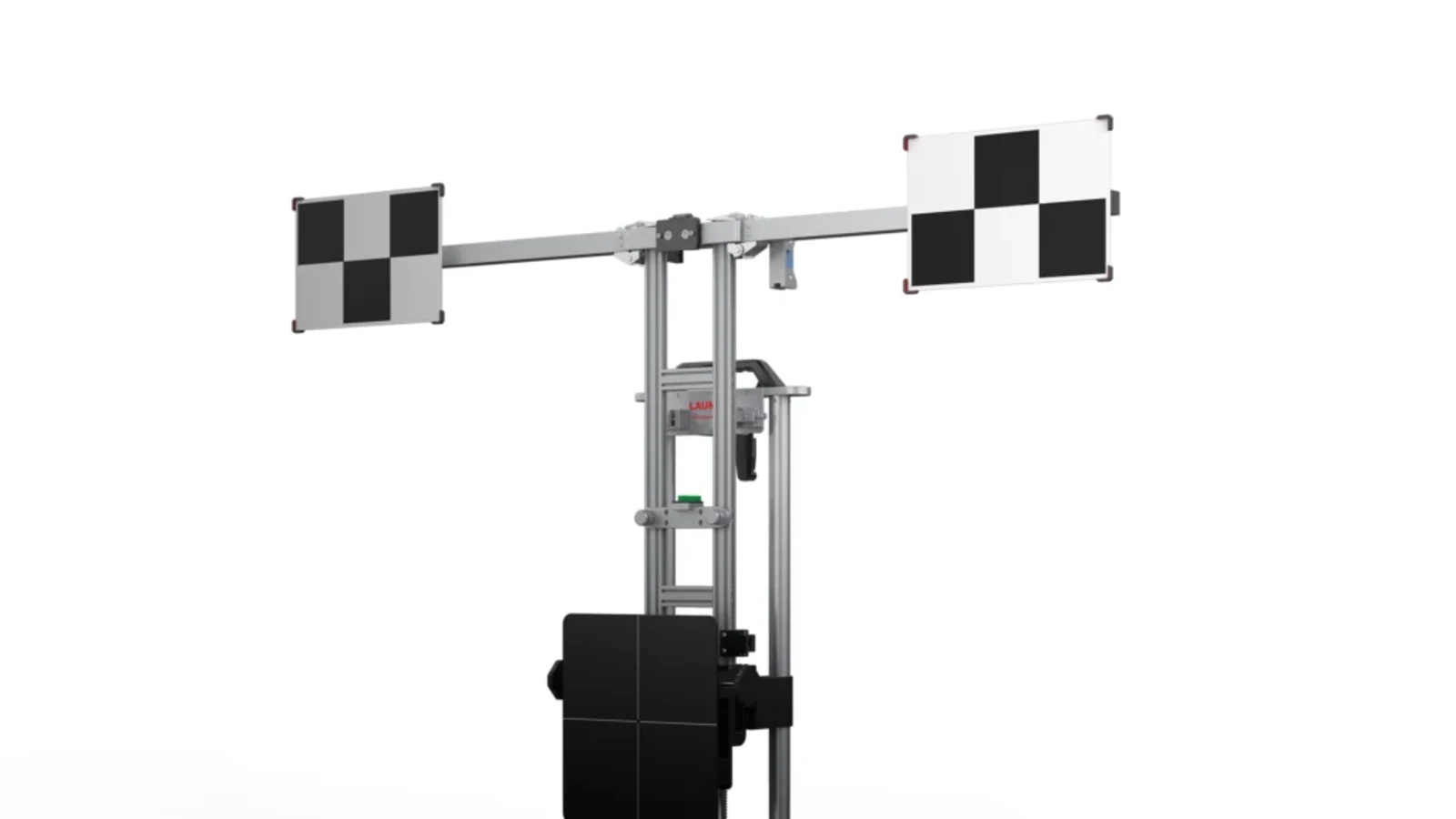
The Launch Tech X-431 ADAS Mobile Plus is a portable ADAS calibration frame designed to help technicians set up measured targets and positioning equipment at a repair facility. True Blue uses equipment like this as part of a broader mobile calibration workflow—not as a replacement for current vehicle-specific OEM repair information, diagnostic access, alignment, suitable site conditions, or technician judgment.
That distinction matters for collision centers, dealerships, and glass shops. The frame can make the physical setup more practical when calibration work needs to happen where the vehicle is being repaired. The vehicle manufacturer still controls whether calibration is required, which method applies, what target or pattern is needed, how the vehicle must be prepared, and how the result is confirmed.
If you are new to ADAS work, start with our practical guide to what ADAS calibration is. If a recent repair prompted the question, our guide to common ADAS calibration repair triggers explains why glass, collision, alignment, suspension, and sensor-area work should lead to procedure research.
What the X-431 ADAS Mobile Plus is
Launch Tech USA describes the Mobile Plus as a lightweight, portable ADAS calibration frame designed for easy setup and mobility. The published product information lists a main frame with foldable arms, four locking swivel casters with leveling pads, magnetic target plates, and fine height adjustment.
Its measurement and leveling equipment is intended to help with the physical placement of targets and the frame. Launch lists a digital laser meter for target-height measurement and a dual-axis bubble level for leveling the stand and targets. The package contents also list laser and reflector components, an auxiliary mirror, a positioning bracket, a plumb line, a tape measure, and other setup items. The exact package configuration matters: Launch presents an LDW package and an LDW Package + Radar (3 in 1) option, so shops should verify what is included with the configuration being used.
The product page identifies compatibility with Launch professional tools including the X-431 Throttle V, Torque Link, and Turbo III. That is a statement about the equipment ecosystem, not a promise that every vehicle or every calibration function is available on every tablet or software subscription.
Why portable setup equipment matters to repair businesses
A fixed calibration bay can be useful, but not every collision center, dealership, or glass shop has one available for every job. A portable frame can help a mobile technician bring the physical setup to a partner facility instead of requiring the shop to arrange another transport step. It can also support a more repeatable setup than improvised tape marks, especially when the procedure calls for measured target height, centerline references, level equipment, or a clear space around the vehicle.
- Collision centers: calibration can be planned alongside blueprinting, alignment, scan work, and final repair documentation.
- Dealerships: a mobile service partner can work within the dealership’s repair flow when an appropriate bay or procedure-ready area is available.
- Glass shops: a windshield replacement involving a forward-facing camera can be reviewed early so glass installation, cure time, scanning, and calibration are sequenced correctly.
Portability does not make a site automatically suitable. A shop still needs to confirm the floor, lighting, clearances, vehicle condition, temperature or other environmental requirements, and any measurements specified by the manufacturer. If those conditions cannot be met, the calibration may need a different location or a different plan.
Where the frame fits in a mobile calibration workflow
The X-431 Mobile Plus supports the physical positioning portion of applicable calibration work. A complete service has several steps around it:
- Identify the vehicle and the repair. Collect the VIN, year, make, model, trim, installed ADAS equipment, and every operation that could affect a sensor, camera, bracket, glass position, body dimension, alignment, or ride height.
- Review current OEM information. Confirm whether calibration is required, which system is involved, whether the procedure is static, dynamic, or combined, what target or pattern is specified, and what prerequisites and completion checks apply.
- Prepare the vehicle and site. Address tire pressure, loading, fuel level, ride height, steering position, wheel alignment, glass installation, diagnostic faults, and other conditions only as required by the vehicle procedure. Prepare the floor and space for the stated distances and clearances.
- Position the frame and targets. Use the frame’s leveling, height-measurement, laser, and positioning equipment as appropriate for the prescribed setup. The technician verifies references and measurements against the applicable procedure rather than relying on a generic position.
- Run the calibration through the required diagnostic path. The compatible diagnostic software and vehicle procedure control the connection, function, aiming or learning sequence, and any target selection. The frame does not itself provide every diagnostic function.
- Complete post-service checks. Review calibration status, diagnostic trouble codes, system communication, steering and alignment conditions, and any road test or additional check required by the manufacturer.
- Document the work. Record the vehicle identification, repair context, procedure or system addressed, scan information, result, relevant measurements, exceptions, and technician notes for the repair file.
Static versus dynamic ADAS calibration
Static calibration uses a measured stationary setup
In a static procedure, the vehicle remains stationary while a technician places a manufacturer-specified target, pattern, reflector, or aiming device at a defined location. The X-431 Mobile Plus is relevant here because its frame, leveling features, laser height measurement, and positioning accessories can support the physical setup for an applicable procedure.
That does not mean one frame setting works for every vehicle. Target type, height, distance, centerline, floor requirements, lighting, vehicle load, alignment, and other conditions can change by make, model, year, trim, system, and repair event. The OEM procedure is the controlling source.
Dynamic calibration uses specified driving conditions
In a dynamic procedure, the vehicle is driven while a compatible diagnostic process allows the system to learn or verify its reference under stated conditions. Road type, markings, speed, weather, traffic, distance, and other requirements may matter. A portable frame is not a substitute for that road procedure.
Some vehicles require both methods
Static and dynamic calibration are not competing shop preferences. A vehicle may require one, the other, or a sequence that includes both. Confirm the exact requirement before scheduling the technician or promising a completion time.
Repairs that may lead to calibration research
A repair trigger is a reason to check the vehicle procedure, not proof that every vehicle needs the same service. Common research situations include:
- Windshield removal or replacement when a forward-facing camera is mounted to or referenced from the glass
- Collision or structural repair near a camera, radar sensor, bracket, mounting point, or sensor field of view
- Removal, replacement, programming, or disturbance of a sensor, camera, module, or support
- Wheel alignment or steering-geometry work that changes a vehicle reference
- Suspension, tire, wheel, or ride-height changes
- Bumper, grille, mirror, liftgate, or adjacent body-panel work around an ADAS component
- A diagnostic instruction, trouble code, failed calibration, or initialization routine that directs additional work
Review the repair history even when the vehicle has no warning light. Conversely, a warning light or code does not identify the complete repair by itself. Scans, physical inspection, alignment information, and current OEM procedures need to be considered together.
Practical planning questions for your shop
Before requesting mobile service, ask:
- Do we have the VIN and the exact repair operations, including parts removed for access?
- Which ADAS system is involved, and does the current procedure call for static, dynamic, or combined work?
- Has the windshield installation, cure time, alignment, tire pressure, loading, ride height, and steering position been handled as required?
- Can the site provide the specified level surface, lighting, measurements, clearance, and road access?
- Are the required diagnostic functions available for this vehicle, and are there active faults that must be addressed first?
- What report, scan results, alignment record, and technician notes need to return to the repair file?
Answering these questions early helps a repair team avoid a last-minute discovery that the vehicle is not ready, the site is not suitable, or a different procedure is required.
Limitations and prerequisites to understand
The X-431 ADAS Mobile Plus is setup equipment. It is not a blanket certification that a vehicle has been calibrated, an OEM approval for every application, or a guarantee of a particular result. Launch’s product information should be checked for the current configuration and compatible Launch tools, while the vehicle manufacturer’s current information controls the application-specific procedure.
Calibration can also depend on diagnostic software access, software updates, target availability, wheel alignment, sensor and bracket condition, glass and body repair quality, vehicle loading, floor conditions, lighting, weather, and road conditions. A technician must be able to stop and resolve a prerequisite or exception instead of treating the frame as permission to proceed.
How True Blue uses portable equipment on site
True Blue brings mobile ADAS calibration support to qualifying auto body shops, dealerships, and glass businesses in Doylestown, Chalfont, Buckingham, Warminster, Lansdale, Horsham, Montgomeryville, and nearby Central Bucks and Montgomery County communities. We review the VIN and repair details, confirm what can be supported, prepare the equipment for the applicable workflow, and document the completed service.
The specific tool used is only one part of that process. If the vehicle requires alignment, a repair correction, a different diagnostic function, a controlled facility, or an OEM-defined dynamic drive, those requirements remain part of the plan.
Request mobile ADAS calibration
Have the VIN, repair operations, scan information, alignment status, and affected ADAS systems ready. Request mobile calibration from True Blue for a Central Bucks-area business, or call (610) 935-5588 to discuss the vehicle and site.
Sources: Launch Tech product terminology and listed equipment were checked against the official X-431 ADAS Mobile Plus product information and its published mobile ADAS calibration overview. Repair-trigger and planning context was checked against I-CAR’s ADAS resource center. Always follow current vehicle-specific manufacturer service information.
Frequently asked questions
What is the Launch Tech X-431 ADAS Mobile Plus?
It is a portable ADAS calibration frame from Launch Tech USA. The published product information describes a lightweight frame with foldable arms, locking casters and leveling pads, magnetic target plates, digital laser height measurement, and dual-axis leveling. The frame is one part of a calibration workflow; the vehicle procedure and appropriate diagnostic tool determine the required work.
Does the X-431 Mobile Plus calibrate every vehicle?
No universal coverage claim should be assumed. Compatibility, required targets, diagnostic functions, measurements, and completion criteria depend on the vehicle, its equipment, the current manufacturer procedure, and the diagnostic software available for that vehicle.
Can a mobile calibration frame perform dynamic calibration?
A frame is primarily setup equipment for procedures that require a stationary vehicle and measured targets. Some vehicles require a dynamic road procedure, some require static and dynamic steps, and some require a different process. The current vehicle-specific procedure and compatible diagnostic tool determine which steps apply.
What should a shop provide when requesting mobile calibration?
Provide the VIN, year, make, model, repair operations, affected ADAS systems, scan information, alignment status, and any known OEM prerequisites. Also confirm that the facility can provide the required level, clear, and appropriately controlled space for the vehicle-specific procedure.
Need ADAS Calibration Services?
We bring OEM-spec calibration directly to your auto body shop or dealership in Central Bucks. Fast turnaround, written reports, and expert technicians.