
What Is ADAS Calibration? A Practical Guide for Repair Shops
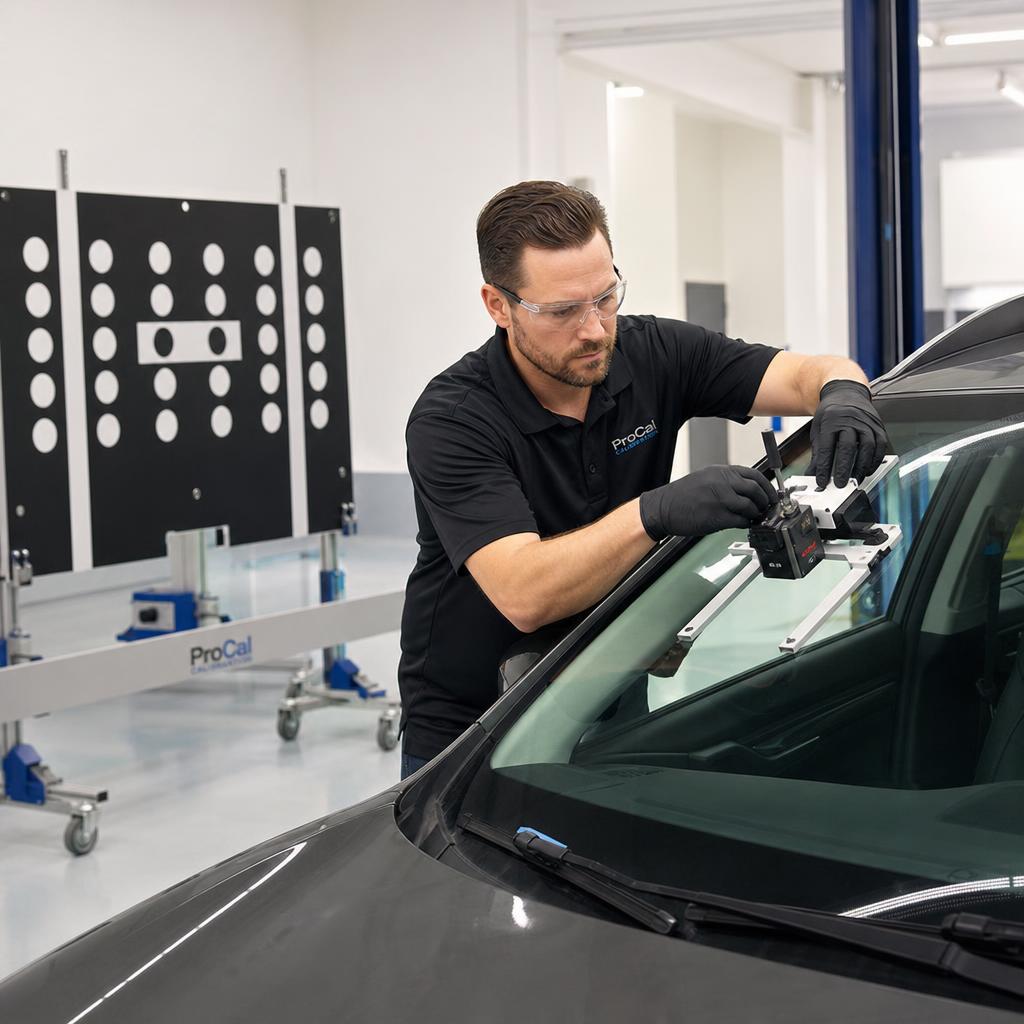
ADAS calibration is the process of aiming and verifying a vehicle’s cameras, radar, and other sensors so driver-assistance features can interpret the road as the manufacturer intended. A sensor can remain powered on and show no obvious physical damage while still needing calibration after a repair changes its position or the vehicle’s geometry.
For auto body shops, dealerships, glass companies, and other automotive businesses, calibration is an important step in completing many modern repairs. The exact requirement and procedure depend on the vehicle, the equipment fitted to it, and the manufacturer’s repair information.
What systems depend on ADAS sensors?
Advanced driver assistance systems use information from cameras, radar, ultrasonic sensors, and related modules to support the driver. Depending on the vehicle, these systems may include:
- Forward collision warning and automatic emergency braking
- Lane departure warning and lane keeping assistance
- Adaptive cruise control
- Blind spot monitoring and parking assistance
- Traffic sign recognition and automatic high beams
Calibration does not change the basic design of these systems. It establishes the reference points they use to understand where the vehicle is positioned in relation to lanes, vehicles, and other objects.
Why is ADAS calibration needed?
A camera or radar sensor works from a precisely defined position. A small change in mounting angle, ride height, thrust angle, or glass position can change where that sensor appears to be looking. Calibration follows the applicable vehicle procedure to aim the sensor and confirm that its electronic reference matches its physical position.
I-CAR advises repairers to identify the vehicle’s ADAS features, consult current OEM procedures, and perform required calibrations as part of a complete repair. That vehicle-specific research matters because triggers and prerequisites differ by make, model, system, and repair.
Common repairs that can trigger calibration
Always confirm the requirement in current manufacturer service information. Common situations that may call for an ADAS calibration include:
- Windshield replacement when a forward-facing camera is mounted to the glass
- Collision repair near a camera, radar unit, sensor bracket, or mounting point
- Removal, replacement, or adjustment of an ADAS sensor or control module
- Wheel alignment, suspension work, or a change in vehicle ride height
- Front or rear bumper, grille, mirror, or body-panel work around a sensor
- A diagnostic trouble code or manufacturer procedure that specifically directs calibration
A warning light is not the only reason to investigate. Repair planning should identify ADAS equipment early, before the vehicle reaches the end of the repair.
Static versus dynamic ADAS calibration
Static calibration
Static calibration is performed with the vehicle stationary. A technician positions manufacturer-specified targets, patterns, reflectors, or aiming equipment at measured locations around the vehicle. The work area, floor, lighting, tire pressure, fuel level, vehicle load, and alignment may need to meet defined conditions before the procedure begins.
Dynamic calibration
Dynamic calibration is performed while driving the vehicle under specified conditions. The scan tool starts a learning procedure while the system observes lane markings, roadside objects, or traffic. Requirements can include road type, speed, weather, distance, and time.
Some vehicles require both
Static and dynamic are not competing methods. The manufacturer may require one method or a combination of both. The correct choice comes from the procedure for the specific vehicle—not from shop preference.
How True Blue approaches a calibration service
- Identify the vehicle and repair. We collect the year, make, model, VIN, affected systems, and relevant repair details.
- Review procedure requirements. The vehicle procedure determines the calibration type, setup, prerequisites, and completion criteria.
- Check preconditions. Conditions such as tire pressure, alignment, vehicle load, diagnostic faults, glass installation, and sensor mounting are addressed before aiming begins.
- Scan and calibrate. The technician performs the required static, dynamic, or combined process using appropriate diagnostic and target equipment.
- Verify and document. Results and relevant scan information are recorded for the repair file.
Our mobile ADAS calibration services bring the setup to qualifying auto body shops and dealerships in Central Bucks and nearby communities. That helps the repair team keep the vehicle and its documentation within an established workflow.
How we use Opti-Aim
Opti-Aim is a camera calibration solution from Pilkington. According to Opti-Aim’s official product information, the system connects to the vehicle, guides the camera-aiming process, and works with the vehicle computer to restore camera alignment to OEM specifications. The platform supports both static and dynamic procedures and provides on-screen guidance.
In practical terms, Opti-Aim helps our technicians carry out the prescribed camera calibration workflow and capture the result. We still verify the vehicle-specific requirements before starting; the equipment supports the procedure rather than replacing repair research or technician judgment.
How we use the Launch Tech X-431 ADAS Mobile Plus
The Launch Tech X-431 ADAS Mobile Plus is a portable ADAS calibration frame. Launch Tech USA describes it as a lightweight system designed for setup and mobility. Its positioning hardware includes laser-based measurement and leveling features that help a technician place the frame and targets for the required procedure.
That portable design fits our mobile service model: the frame, targets, measurement tools, and compatible diagnostic equipment can be brought to a partner facility. The vehicle procedure still controls which targets are used, how they are positioned, and whether a static or dynamic step is required.
What calibration documentation should show
A useful repair file connects the calibration to the vehicle and the work performed. Depending on the procedure and system, documentation may include vehicle identification, pre- and post-scan information, the calibration performed, completion status, diagnostic results, and technician notes.
Clear records help the repair facility explain what was completed, support insurer communication, and preserve a traceable file for the customer. A calibration report should complement—not replace—the shop’s estimate, repair plan, alignment records, and other supporting documents.
The value of getting calibration right
ADAS features depend on reliable sensor inputs. Completing the required procedure helps return the system to its intended operating reference after repair. It also reduces avoidable supplements and delays by making calibration part of repair planning instead of a last-minute discovery.
For businesses in Doylestown, Chalfont, Buckingham, Warminster, and surrounding Bucks and Montgomery County communities, a local mobile partner can simplify scheduling. Review our Central Bucks service area or use the request form to confirm availability for a specific vehicle and facility.
Request an ADAS calibration
Have the VIN, repair details, and affected systems ready. Request a calibration from True Blue, or call (610) 935-5588 to discuss the vehicle and required timing.
Sources: Product capabilities were checked against official Pilkington Opti-Aim product information, Launch Tech USA product information, and I-CAR ADAS repair guidance. Always follow current vehicle-specific manufacturer procedures.
Need ADAS Calibration Services?
We bring OEM-spec calibration directly to your auto body shop or dealership in Central Bucks. Fast turnaround, written reports, and expert technicians.